


Couples & Relationship Counselling in Chatham
If you’re arguing about the same things, drifting apart, or trying to rebuild trust after something has broken it, couples counselling gives you both a space to be heard properly.
I see couples in person at my practice in Chatham and online across the UK, in English or Polish.
I’m a BACP/NCPS accredited psychotherapist, and sessions start from £75 for 50 minutes.
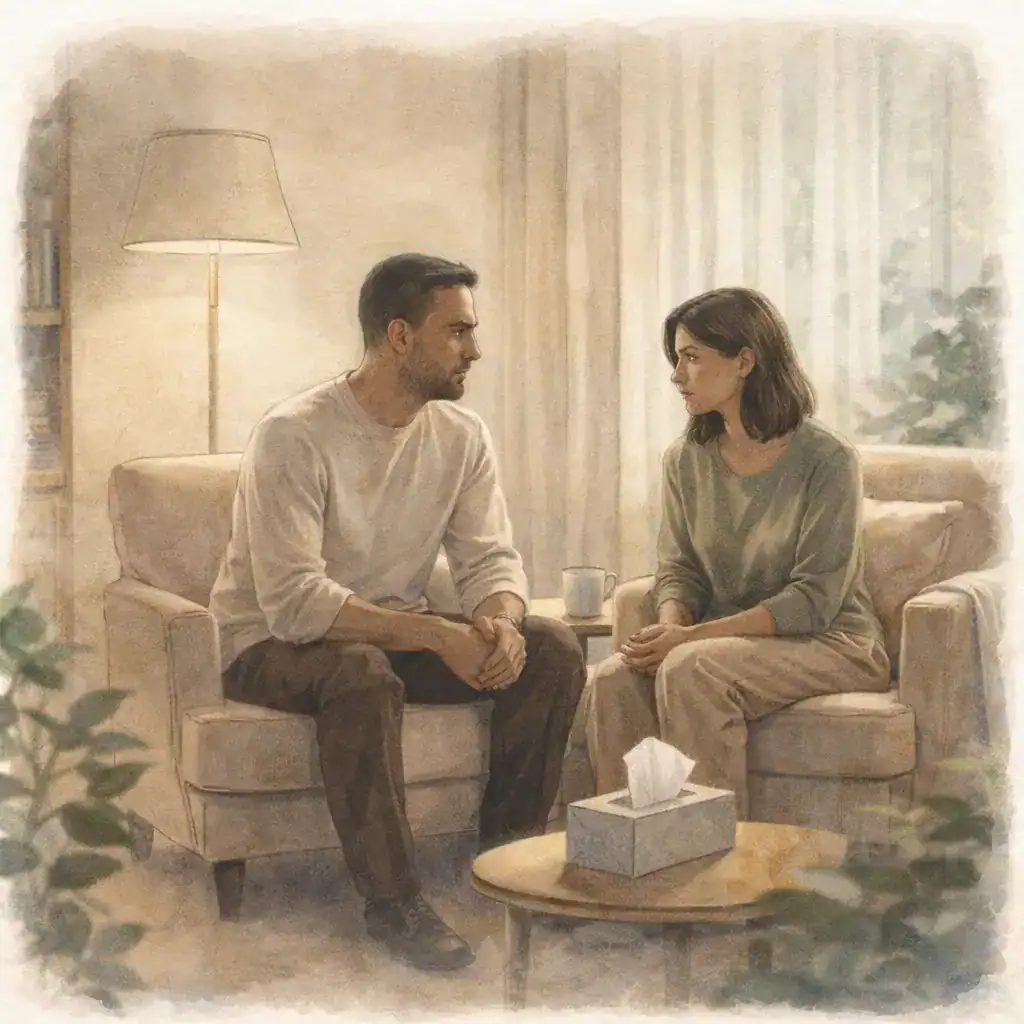
Benefits of Couples Therapy
Couples therapy is often most helpful when talking at home feels unproductive, tense, or goes nowhere. Our work focuses on helping both partners understand their patterns, reduce escalation, and find safer ways to communicate and reconnect.
Most of the couples I see are based in Chatham itself, or a short drive away in Gillingham, Rochester, Rainham, and Strood. Others travel further across Medway and Kent, and some work with me entirely online.
Couples therapy isn’t about deciding who’s right or wrong. We work to understand the dynamics between you, so responsibility and change don’t fall on just one person.
Improving Communication
Learn to express your needs clearly and listen effectively to your partner, fostering better understanding and reducing misunderstandings - especially when conversations quickly turn into arguments or silence. Sessions run from my Chatham practice, a short journey from Gillingham and Rainham, or online if that's easier to fit around work and childcare.
Conflict Resolution
Develop healthy strategies to manage and resolve conflicts, preventing them from escalating and strengthening your ability to work through disagreements. When the same disagreements keep resurfacing without resolution.
Rebuilding Trust
Address past hurts and rebuild trust in your relationship, laying a stronger foundation for future growth and intimacy. Whether trust has been damaged by specific events or gradually worn down over time.
Enhanced Emotional Connection
Deepen your emotional bond by exploring your feelings and reconnecting on a more intimate level, bringing you closer together, particularly if closeness has faded or feels hard to reach safely.
Many couples travel in from Rochester and Strood for weekly in-person sessions, alongside those joining from further across Kent by video call.
Increased Relationship Satisfaction
Work together to identify and resolve issues, leading to greater satisfaction and fulfilment in your relationship.
Strengthened Partnership
Equip yourselves with tools and skills to navigate future challenges as a team, ensuring a more resilient and enduring partnership.
Individual Therapy
In some cases, individual therapy alongside couples work can be helpful, particularly if one partner needs space to explore personal experiences in more depth. This can be discussed together as part of the process.
Trauma-Informed Therapy
Sometimes relationship difficulties are shaped by past experiences or trauma that affect how each partner responds under stress. If this feels relevant, trauma-informed therapy can be part of the wider conversation.
Not Sure If Couples Therapy Is Right for You?
It’s a fair question, and most couples wrestle with it before ever making contact. If you want a clearer sense of when couples therapy tends to help, Couples Therapy in Chatham: Signs It Might Help walks through the patterns I see most often in the room.
Transparent Pricing
At Therapy with Tom, I’m dedicated to nurturing your mental health and overall well-being. My pricing is transparent and flexible to suit your needs.
I see couples in person at my practice in Chatham, as well as working with people across Medway and Kent – Gillingham, Rochester, Strood, and Rainham are all a short drive away, plus online sessions UK-wide. For a fuller picture of how therapy works across Medway, that page covers the practicalities in more depth.
Please get in touch with me directly if you are worried about the affordability of therapy.
Fees reflect session length and whether sessions are held individually or jointly. We can discuss what feels most appropriate for you.
Couples Therapy
Dedicated 50-minute sessions aimed at enhancing communication, resolving conflicts, and deepening your connection with your partner.
from£75Couples Therapy
Extended 90-minute sessions aimed at enhancing communication, resolving conflicts, and deepening your connection with your partner.
from£110
Frequently asked questions
Couples therapy is a dedicated 50-minute (or 90-minute extended) session with both partners present, either in person or online. The work focuses on what happens between you: communication patterns, recurring conflict, disconnection, or decisions you’re struggling to navigate together.
It’s not about taking sides or identifying who is “at fault”. The focus is on understanding the dynamic between you and finding ways to shift it.
It’s helpful if both partners are willing to engage, but it’s normal for one person to be more hesitant than the other at the start. You don’t both need to arrive fully certain – just willing to try.
If only one partner is seeking support, individual therapy may be a better starting point. We can discuss what makes most sense in the consultation.
Yes – but there’s an important nuance for couples work. Confidentiality in couples therapy is shared between both partners. I don’t hold secrets for one partner against the other.
If one partner shares something privately that has direct relevance to the therapy, I’ll encourage it to be brought into the session rather than kept between us. I won’t hold individual therapeutic conversations with one partner without the other’s knowledge.
Yes, though please let me know beforehand if you’ll be joining from separate locations. This affects how the session is set up and is useful to know in advance.
The standard couples session is 50 minutes (£75). The extended session is 90 minutes (£110). Extended sessions give more time to work through complex or deeply ingrained dynamics without feeling rushed. We can discuss which format is appropriate depending on where you are in the work.
Both. In-person sessions take place at my practice in Chatham, Medway, easily reached from Gillingham, Rochester, Strood, and Rainham. Online sessions are available UK-wide by video call, and I’m also trained in telephone counselling if that suits you better.
There’s no fixed length. Some couples find a handful of sessions gives them what they need; others continue for months, especially where patterns run deep. We review progress regularly, so the pace stays led by what’s actually helpful for you.
Initial Conversation
A short, no-pressure conversation. We’ll talk about what’s bringing you here and whether this way of working feels right for you. You’re welcome to ask questions or say what you’re unsure about.
Beginning the Work
If you decide to continue, we’ll agree some basic boundaries - frequency, format, and pace. There’s no single “right” way to begin, and things can change as we go.
Regular Sessions
Sessions focus on what feels most relevant for you at the time. There’s no requirement to cover everything or to move into difficult areas before you’re ready.
Pausing and Reviewing
From time to time, we’ll check in on how the work feels. If something isn’t helping, we can adjust the approach or take a break.
Open Therapy
As we progress, our sessions will evolve into open therapy. This means the focus and direction of each session are led by you, allowing for deeper exploration and personal growth.
Ending or Continuing
Therapy doesn’t have to follow a set timeline. You can choose to end when it feels right - and return later if that’s helpful. Remember, the door is always open should you wish to return.